How to avoid supplier scams
4 min read
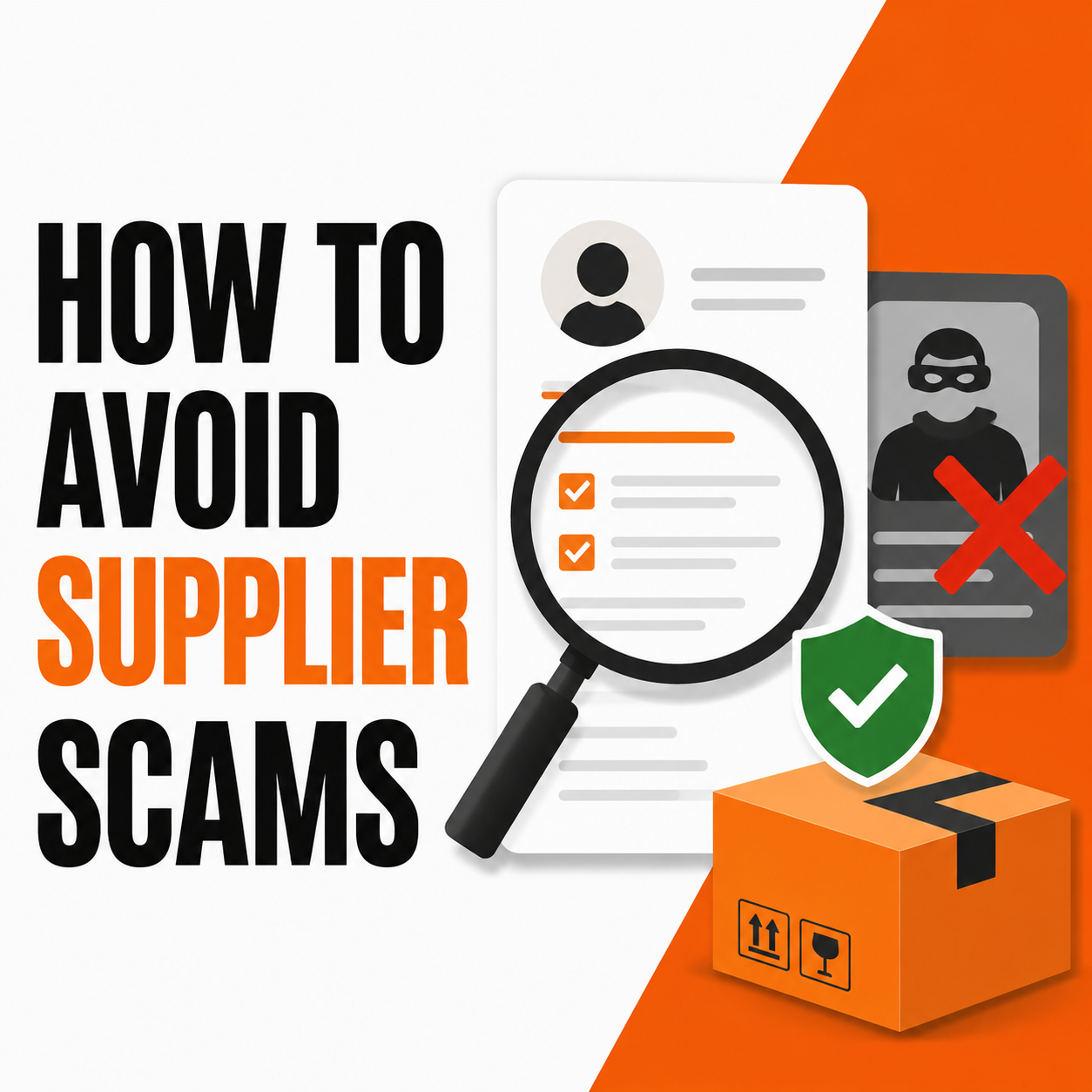
The scams Nigerian importers actually lose money to when buying from China: fake factories, switched bank accounts, sample switching, and the one check that stops each of them.
Most losses are quiet
People picture a supplier taking the money and disappearing. That happens. It is not what usually happens.
What usually happens is quieter. The goods arrive, and they are thinner, smaller, weaker, or there are fewer of them than you paid for.
You paid for something you did not get, and the person who sold it to you is 12,000 km away.
Warning sign: the price is far below everyone else
Four suppliers quote a similar price. One quotes half. That one is not being generous.
They are quoting a thinner material, a smaller motor, a lighter gauge, or a product they plan to swap later.
Ask what is different. A real factory can always explain its price.
Warning sign: please pay this personal account
A registered Chinese company has a bank account in the company's registered name.
If you are asked to pay a personal account, or an account in another country, stop. This is the loudest alarm in importing, and it means no Chinese court will ever help you, because on paper you paid a stranger.
Warning sign: the bank details changed by email
An email arrives. The account has changed. There is a reasonable sounding excuse.
Somebody is reading the supplier's mailbox, or yours, and the money is gone the second it lands.
Confirm every change of account by voice or video call, with a person you have spoken to before.
Warning sign: a perfect sample
The sample is made slowly, by hand, by somebody who cares. Production is not.
This is why inspection before shipping protects you more than the sample ever did.
The checks that actually work
Do all of this before any money moves.
- The company is registered in China, under the exact name written on the invoice.
- Its business licence covers the product they say they make.
- The bank account name matches the registered company name, letter for letter.
- Somebody has seen the place, in person or on live video. Photos do not count.
- The goods are counted and inspected before they leave China.
How to read a Chinese business licence
Every registered company in China has a one-page business licence (营业执照). Ask for it before you pay anything. A real company sends it without arguing. Five things on it matter.
- The registered name, in Chinese characters. It must match the invoice and the bank account exactly. The English name is marketing. The Chinese name is the legal one.
- The unified social credit code. Eighteen characters, like a national ID for a company. You will use it in the next step.
- The business scope. If a factory has a scope that only mentions trading and wholesale, it is a trading company.
- The legal representative. The person the law holds answerable. Their name should not be a surprise to you.
- Registered capital and date. Neither proves much alone. But a company registered last month, with small capital, quoting like a twenty year old factory, has questions to answer.
Check the company yourself, for free
China publishes its company registry at gsxt.gov.cn. Search the exact Chinese name, or the eighteen character code from the licence.
You are looking for three things. That the company exists and is still active (存续). That the name, the scope and the legal representative match what they told you. And that they are not on the abnormal operations list or carrying penalties.
The site is in Mandarin only, and browser translation gets you most of the way. If that is a wall, this check is part of what we do. We read the original and tell you plainly what it says.
If it goes wrong anyway
All of your power exists before the goods ship, and before the last payment.
A factory still waiting for its balance will fix problems. A factory already paid in full has very little reason to. That is the whole argument for inspecting first and never paying everything up front.
If you bought on a platform with trade protection, complain inside its time window and bring evidence: photos, the contract, the chat history. It works for clear cases and it is slow for everything else.
Chinese courts are real and they do rule against bad suppliers. But for a small importer in another country, the cost, the language and the distance make them impractical for most orders. Treat the law as real but expensive, and prevention as the only cheap protection you have.