How to buy from China
4 min read
A plain guide to importing from China to Nigeria: finding a factory, checking it is real, paying in naira, inspecting the goods, and shipping to Lagos, Kano, Abuja or Port Harcourt.
Start with what you want, not who sells it
Most people start by looking for a supplier. Start with the product instead.
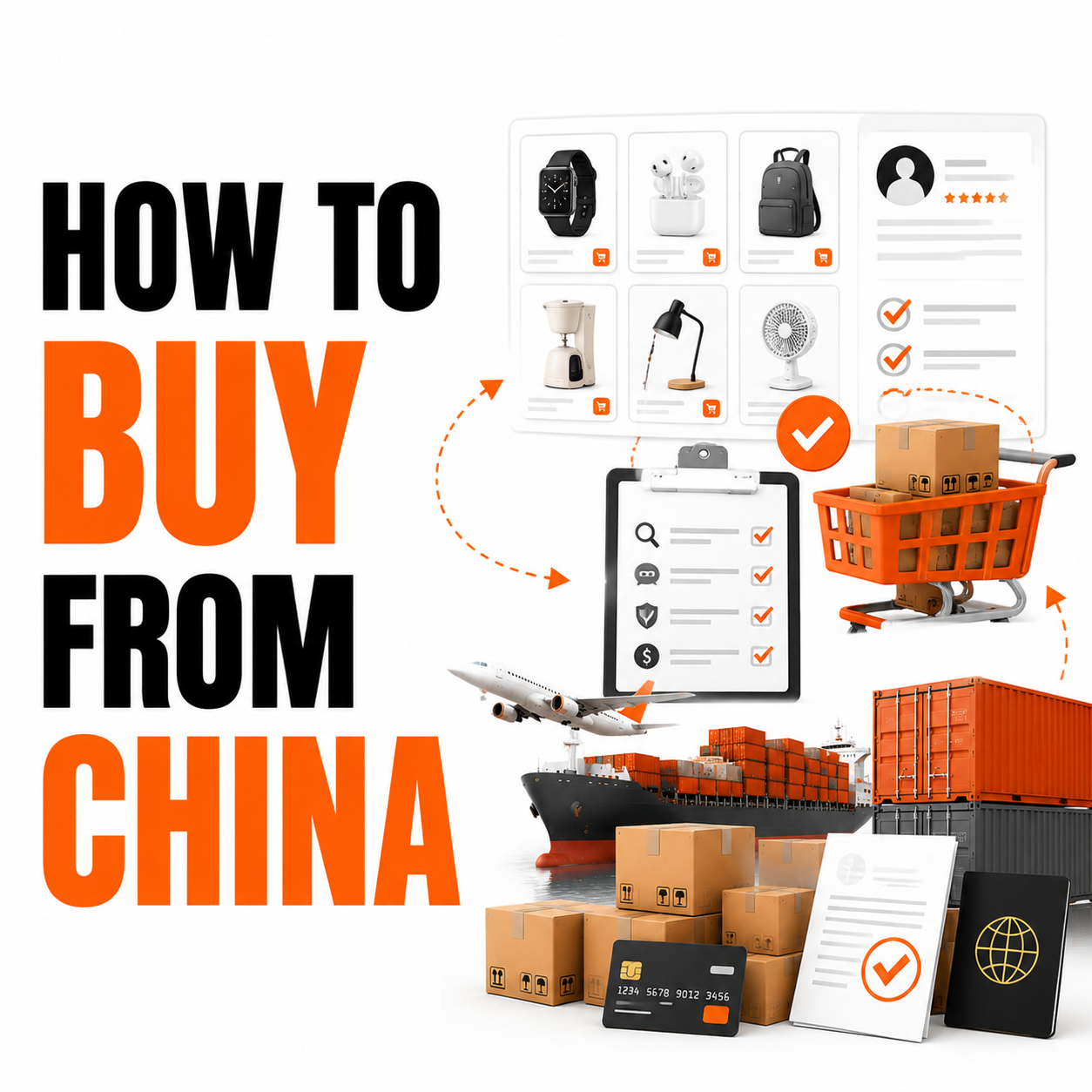
Write down the item, the size, the material, the colour, the voltage, how many, and the city it has to reach.
That list is worth money. A clear request gets a fast, honest price. A vague one gets a padded price, or no reply at all.
Know who you are talking to
China has three kinds of sellers, and the price usually tells you which one you have.
- Factories make the goods. Best prices, bigger minimum orders, usually no English.
- Trading companies buy from factories and sell to you. Easier to deal with, more expensive, and some will not tell you who really makes the product.
- Middlemen own nothing. They pass on your money, and your risk.
What a real quotation looks like
A real quotation tells you five things. The price per unit. The smallest order they will take. How long production takes. How the goods are packed. And what happens if they come out wrong.
A price with none of that is not a quotation. It is bait.
Ask three suppliers for exactly the same thing. If one price sits far below the rest, you are being quoted a different product.
Buy one sample first
Pay for one sample, and pay the courier to bring it to you or to your agent in China.
It will cost more per unit than the order will. That is normal, and many factories take it off your first invoice.
A sample proves the factory can make the thing, and it sets the standard you are buying: the material, the weight, the finish. It does not prove that a thousand of them, made in a hurry, will match it. Only inspection proves that.
Keep it. Inspection checks your goods against that exact sample. Not photos. Not memory.
Check duty, NAFDAC and SON before you order
Every product has a code, and customs uses that code to decide your duty. On some goods it is small. On others it adds more than a third to what you paid.
Find out before you order. Most people find out at the port, and by then the money is spent.
Some goods also need approval before they are allowed in. NAFDAC covers food, drinks, drugs, cosmetics and anything medical. SON covers many manufactured and electrical goods. Both take weeks, sometimes months, and goods that arrive without them sit in charges or get seized.
Customs also keeps a list of banned imports, and it changes. If you are not sure where your product stands, ask somebody who already imports it. Or ask us. It is a one minute question that can save a whole shipment.
Pay in a way that protects you
Never send money to a personal account. Never pay everything up front to a supplier nobody has checked.
You rarely need a domiciliary account for any of this. You pay your agent in naira, the agent pays the factory in RMB, and the agent shows you the proof.
Inspect before it ships, not after
The moment your goods leave China, your leverage is gone.
Inspection before shipping is the cheapest insurance in this business. Photos, video, a count, and a check against your sample.
Choose air or sea on purpose
Air takes about 7–14 days. Sea takes about 75–100 days.
Small, light or urgent goods go by air. Big, heavy goods go by sea. Most people test the market with a small air shipment, then repeat the winner by sea.
What it costs, with real numbers
Rates move, so read this as a shape rather than a quote. The live rates on our homepage are the ones to plan with.
Say you buy 100 blenders at ¥85 each. The goods cost ¥8,500. At ₦208 to ¥1, that is ₦1,768,000.
Boxed, each blender takes about 0.012 CBM, so 100 of them is roughly 1.2 CBM. At ₦500,000 per CBM by sea, shipping is about ₦600,000.
Landed cost: about ₦2,368,000, or roughly ₦23,680 a blender before duty and your own costs at home.
Notice what shipping did. It added about a third to the cost of the goods, which is why you work it out before you order.
And notice the only number that decides anything: the cost of one blender. Put it next to what one sells for in your market, and the answer makes itself.